
Language Models for Behavior-Based Malware Analysis
Malware is evolving, and so are detection methods. Traditional approaches relying on static signatures struggle against modern threats, especially polymorphic and zero-day malware. Behavior-based analysis, which examines runtime actions like API calls and file changes, offers a solution – but even this has its challenges with increasingly complex malware.
Language models (like GPT variants) are changing the game. These tools analyze code behavior, identify suspicious patterns, and explain malicious intent in plain language. For example, MalParse, developed by LSU researchers, classified malware with 77% accuracy without prior training, while also detailing the root causes of malicious actions.
However, attackers are also leveraging these technologies. Malware like MalTerminal uses language models to generate commands in real time, avoiding static detection methods. This creates a new challenge for defenders, who must now track dynamic, runtime-generated threats.
Here’s what you need to know:
- How language models improve malware detection: They analyze both static and runtime behaviors, bridging gaps in traditional methods.
- Emerging threats: Attackers are embedding language models into malware, generating harmful code dynamically.
- Defense strategies: Focus on identifying artifacts like API keys, monitoring external AI connections, and integrating language model-driven tools into workflows.
The cybersecurity landscape is shifting. Both attackers and defenders are using advanced tools, making it critical to rethink detection and response methods.
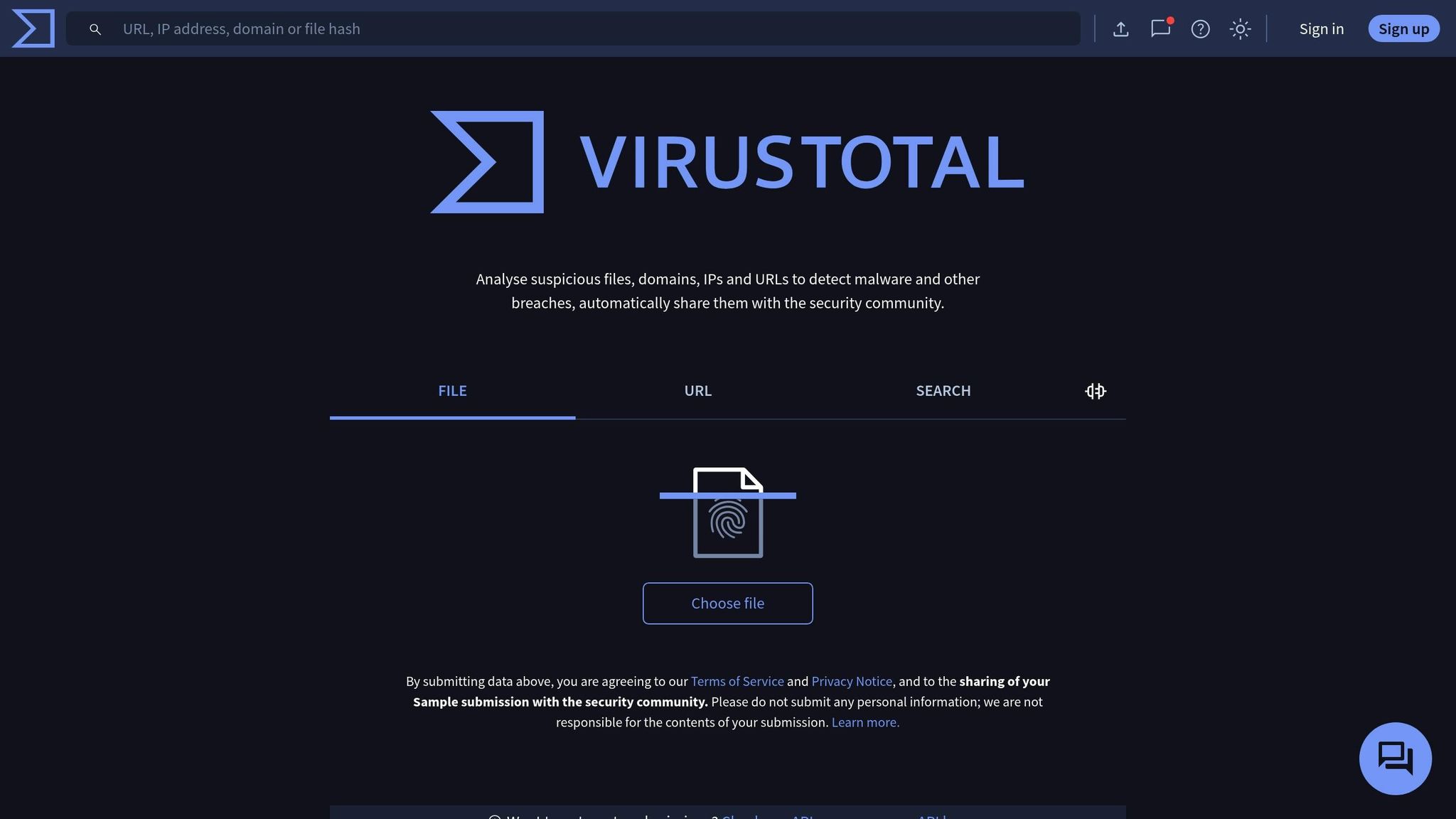
Analyzing VirusTotal‘s Malware Executables Collection with LLMs
Using Language Models for Malware Detection
Language models are changing the way cybersecurity teams identify and classify malicious software. Building on earlier insights into their role in detecting harmful behavior, this section dives into their real-world applications in threat detection. The shift from rigid, rule-based systems to more flexible methods that analyze the intent behind code – focusing on runtime behaviors rather than static signatures – marks a major step forward in malware detection.
Improving Static and Dynamic Analysis
Traditional static analysis relies on manually crafted rules, which quickly become outdated as malware evolves. Language models, on the other hand, use semantic analysis to trace code logic and flag suspicious API usage. They bridge the gap between static and dynamic analysis, offering a more comprehensive approach. In static analysis, they identify suspicious code patterns and API calls. In dynamic analysis, they correlate these findings with real-time behavior to confirm malicious activity.
Here’s how this works in practice: when analyzing a potentially harmful file, a language model can examine its source code or binary and flag concerning API calls – like those that modify system files or establish network connections. But it doesn’t stop there. The model explains why these calls are suspicious. If the file is executed in a sandbox environment, the model observes its behavior and cross-references it with the static analysis findings to confirm whether the intent is malicious.
This multimodal approach enhances detection. For instance, language models trained on datasets like SBAN – which includes over 3.7 million software samples across binary, assembly, source code, and natural language formats – can analyze malware from multiple angles simultaneously. This allows them to identify threats that may appear harmless in one form but reveal malicious patterns when examined more deeply, such as in assembly instructions or reconstructed source code.
These capabilities are laying the groundwork for impressive performance metrics, as outlined in the next section.
Performance and Accuracy Results
Recent studies highlight how effective language models are in detecting malware, even without specialized training. Researchers from LSU, including Aisha Ali-Gombe and James Ghawaly, developed MalParse – a generative AI model that achieved 77% accuracy in malware classification without prior training. This is particularly striking because it shows that general-purpose models can adapt to malware analysis without extensive domain-specific preparation.
What makes MalParse stand out is its ability to go beyond simple identification. It provides detailed explanations, pinpointing the root causes of malicious behavior and highlighting the exact code snippets responsible for the threat. This level of transparency addresses a common issue with traditional AI models, which often function as "black boxes."
That said, performance can vary depending on the environment and task. Research from Netskope Threat Labs tested the ability of models like GPT-3.5-Turbo, GPT-4, and GPT-5 to generate malicious code for evasion techniques, revealing important limitations:
| LLM Model | Real Hardware Performance | AWS Workspaces Performance | AWS VDI Performance |
|---|---|---|---|
| GPT-3.5-Turbo | 18/20 (90%) | 3/20 (15%) | Not tested |
| GPT-4 | 18/20 (90%) | 2/20 (10%) | Not tested |
| GPT-5 | Not specified | Not specified | ~18/20 (90%) |
These results emphasize a key point: language models must be tested across diverse environments. For example, GPT-4 achieved 90% success on real hardware for anti-VM/sandbox detection code generation but dropped to just 10% on AWS Workspaces due to its inability to account for modern cloud VDI artifacts. GPT-5 showed significant improvement, achieving around 90% success in AWS VDI environments, although its stronger safety mechanisms sometimes replaced malicious code with safer alternatives.
Across the broader research landscape, transformer-based architectures and language model-driven approaches continue to push the boundaries of malware analysis. These models combine the accuracy of human expertise with the speed of machine processing, excelling at recognizing patterns across different contexts and code implementations.
Implementation Examples
Organizations are already using language models in malware detection workflows, and the results are promising. MalParse is a prime example of a system ready for deployment in security operations centers. Its plain-English explanations not only speed up threat response but also serve as valuable training materials for new analysts.
Other tools are leveraging language models for automated analysis. FalconShield, for instance, scans Python files for malicious patterns and uses GPT models to determine whether code is harmful. It then generates detailed malware analysis reports. This automation reduces the workload for analysts while maintaining high detection accuracy, enabling teams to handle more threats efficiently.
Research projects using models like CodeBERT, CodeLlama, and GPT variants trained on the SBAN dataset show how organizations can build advanced code intelligence systems. These models excel at analyzing code across multiple formats – binary, assembly, source code, and natural language – creating comprehensive threat profiles.
Another example is the Security Bulldog platform, which uses a proprietary Natural Language Processing engine to distill open-source cyber intelligence. This helps teams save time, understand threats more quickly, and make better decisions. Its integration with existing tools demonstrates how language models can enhance, rather than replace, current security infrastructure.
It’s important to note that language models are most effective as tools to augment human analysts, not replace them. These models excel at processing large volumes of code, spotting suspicious patterns, and generating initial assessments. Human analysts then validate these findings, apply their contextual knowledge, and make final decisions. This collaboration between AI and human expertise creates a stronger, more reliable defense system.
Language Model-Powered Malware Threats
Attackers are leveraging language models to create malware that can generate harmful code on demand. This marks a shift from traditional, static threats to more dynamic attacks capable of evading standard detection methods.
Features of Language Model-Powered Malware
Unlike conventional malware, which contains all its malicious instructions within its binary, malware powered by large language models (LLMs) relies on external AI to execute its attack logic. When activated, this type of malware connects to a language model to generate harmful routines like process injection, antivirus bypass scripts, or evasion techniques in real time. This approach ensures that the full attack chain doesn’t exist in a static form until execution, making it harder to detect using traditional methods.
Instead of embedding hardcoded instructions, these malware samples often include API keys and structured prompts to communicate with external language model services. This shift in architecture gives attackers a significant advantage. The malware can adjust to the specific environment it encounters, generating code that works across various systems while keeping its presence minimal. Research has even shown that attackers can manipulate language model safeguards by framing prompts as legitimate tasks, such as "penetration-testing automation tools."
These capabilities are no longer theoretical – they’ve been observed in real-world attacks.
Examples of Language Model-Driven Attacks
Real-world cases highlight the potential of LLM-driven malware. One notable example is MalTerminal, identified by SentinelOne’s SentinelLABS and presented at the LABScon 2025 security conference. MalTerminal is considered the first known malware to incorporate large language model functionality. Developed before November 2023, it integrates GPT-4 capabilities into a Windows binary paired with Python scripts. Its interactive menu even allows users to choose between "ransomware" and "reverse shell" modes, showcasing how AI tools can empower even less-skilled attackers.
Other emerging examples, like LAMEHUG (also called PROMPTSTEAL) and PromptLock, point to a growing trend of LLM-embedded malware. The rapid adoption of generative AI tools across industries has also opened doors for cybercriminals to exploit these technologies, not just for malware creation but also for phishing campaigns and other attack phases.
As these threats evolve, traditional detection strategies are struggling to keep pace.
Detection Difficulties
Detecting LLM-powered malware requires a completely new approach. One major challenge is that the malicious code is generated during runtime rather than being embedded in the malware itself. This makes signature-based detection methods largely ineffective. Since the attack logic is created dynamically, its behavior can shift depending on the target environment or even between different executions, making it hard to establish consistent indicators of compromise.
Traditional forensic tools, which rely on analyzing static binaries, often fall short because the full attack chain exists only in memory. Attackers can also use tactics like "LLM poisoning", where they embed misleading comments in source code to evade AI-driven analysis.
However, these unique characteristics also create new opportunities for defenders. Security researchers have started identifying LLM-enabled malware by focusing on specific artifacts, such as embedded API keys and predefined prompt configurations. Defenders can monitor unusual connections to external language model APIs, detect prompt patterns aimed at generating code or evasion scripts, and analyze binaries that combine minimal embedded logic with heavy API integration. Incident response teams face additional challenges, as post-incident analysis may reveal only traces of API calls and minimal embedded code rather than the full, dynamically generated attack. This makes it critical to correlate network activity involving language model APIs with system behavior changes to uncover the full scope of an attack.
sbb-itb-9b7603c
Future of Malware Detection and Defense
The rise of language model-powered threats is reshaping how cybersecurity teams approach their work. Attackers are gaining new tools, but defenders also have access to powerful technologies that can transform how they detect and respond to threats. The challenge lies in understanding how the balance of power shifts and ensuring defenders maintain a proactive edge. This constantly changing threat landscape calls for advanced safety measures and forward-thinking defense strategies.
Safety Measures in Language Models
Developers are making strides in preventing the misuse of language models for malicious purposes. For example, advanced models like GPT-5 show noticeable improvements in safety compared to earlier versions. Instead of merely refusing to generate harmful code, GPT-5 takes it a step further by providing safer, non-malicious alternatives – essentially cutting off the attack before it begins.
Earlier models like GPT-3.5 and GPT-4 had vulnerabilities. Attackers could use role-based prompt injection to disguise malicious requests as legitimate penetration-testing tasks. Testing revealed that GPT-3.5 and GPT-4 had a 90% success rate for defense evasion on physical hardware but dropped to 15% and 10% on AWS Workspaces. Initial tests of GPT-5 on AWS VDI show it retains a 90% success rate but with much better code quality. While fully autonomous, language model-driven malware is technically possible, it remains limited by code reliability challenges and strong safety guardrails.
New Opportunities for Defense
Language models offer cybersecurity teams new ways to boost threat detection and response. These models can act as "semantic reverse engineers", tracing logic flows, spotting API misuse, and clarifying intent through natural language reasoning rather than relying solely on traditional analysis. Specialized datasets are speeding up these advancements. For instance, the SBAN Dataset 2025, developed by the Canadian Institute for Cybersecurity, provides a large-scale resource that aligns binary, assembly, source code, and natural language data. This dataset, complete with expert-verified descriptions, supports advanced code analysis and more effective cybersecurity measures.
In practice, cybersecurity teams should focus on hunting for identifiable artifacts left by language models, such as embedded API keys or hardcoded prompt structures. These elements offer detection opportunities that traditional malware analysis might miss. Integrating LLM-powered semantic analysis tools into existing workflows can streamline threat analysis, improve malware classification, and speed up response times.
Platforms that use natural language processing to distill cyber intelligence also play a crucial role. Take The Security Bulldog, for example – an AI-driven platform that processes millions of documents daily to highlight relevant threats. This approach drastically reduces the time spent on manual research, allowing cybersecurity teams to focus on responding to threats instead of sifting through data.
The Evolving Attacker-Defender Landscape
As defenders enhance their tools, attackers are also evolving their tactics. The competition between attackers and defenders using language models represents a pivotal shift in cybersecurity. Both sides now have access to powerful capabilities, creating a dual-use challenge that forces defenders to rethink their strategies.
Attackers are leveraging language models to craft text that is grammatically correct, contextually relevant, and highly persuasive – perfect for advanced social engineering campaigns. Tools like WormGPT 4 and KawaiiGPT have made it easier for even inexperienced attackers to execute sophisticated campaigns that were once the domain of expert hackers.
In this new reality, defenders can’t rely on traditional indicators like poor grammar or sloppy code to spot threats. Instead, they must take a proactive approach by investing in LLM-based defense tools, enforcing strong safety measures, and mastering prompt engineering to counter adversarial tactics. Prompt engineering has become a critical skill, as attackers refine their methods to manipulate inputs and bypass safeguards.
The path forward is clear. Organizations must adopt multimodal detection strategies that analyze software at multiple levels – binary, assembly, source code, and natural language. They also need to account for runtime code generation, moving beyond static analysis of embedded malicious code. Seamlessly integrating these tools into existing workflows will accelerate threat response and reduce mean time to remediation (MTTR). Adaptive, self-learning LLM platforms will be essential for staying ahead in this ongoing battle.
Conclusion
Language models are changing the game in malware analysis, moving the field from static rules to smarter, more dynamic approaches. Take MalParse, for instance – a detector developed by LSU researchers. Without any prior training, it achieved 77% accuracy in classifying malware, while also identifying malicious code snippets and explaining harmful behaviors. This level of insight gives security teams a clearer understanding of complex threats, helping them respond faster and make better decisions. It’s a step forward in creating a more agile and informed defense system.
However, the same technology that empowers defenders also opens doors for attackers. While tools like semantic reverse engineering help trace logic, flag API misuse, and uncover malicious intent, bad actors can use these capabilities to create more advanced threats. A prime example is MalTerminal, discovered by SentinelOne researchers before November 2023, which is the first known malware to embed a large language model (LLM). This development disrupts traditional detection methods, as attackers can now bypass common red flags like poor grammar or clunky code.
To stay ahead, organizations need to adopt broad, multifaceted strategies that combine binary and natural language analysis. The SBAN dataset, which includes over 3.7 million real-world software samples, offers a foundation for such in-depth analysis. Key tactics like spotting embedded API keys and hardcoded prompts remain critical for uncovering LLM-powered malware.
Another challenge is managing the flood of data security teams face daily. Platforms like The Security Bulldog tackle this by using natural language processing to sift through millions of cybersecurity documents, cutting manual research time by up to 80%. This efficiency frees teams to focus on tackling threats rather than being bogged down by excessive alerts.
As both attackers and defenders refine their use of language models, the focus must shift to adaptive strategies. Organizations that invest in self-learning, flexible defenses will be better equipped to stay ahead in this escalating battle. While the tools to transform cybersecurity are already here, quickly adopting these adaptive approaches is essential. This shift marks a critical moment where intelligent, evolving defenses become the backbone of effective threat protection.
FAQs
How do language models improve behavior-based malware analysis compared to traditional methods?
Language models bring a fresh approach to behavior-based malware analysis by processing and making sense of vast amounts of data, including the intricate patterns found in malware behavior. Unlike older methods that depend on static rules or signature-based detection, these models can evaluate dynamic behavioral data in real-time, spotting anomalies and uncovering previously unknown threats with greater accuracy.
Using Natural Language Processing (NLP), language models can also connect and interpret varied data sources like system logs, network activity, and threat intelligence reports. This capability enables cybersecurity teams to identify advanced malware more quickly, cut down on false positives, and focus their efforts on the most critical threats by providing context-rich insights.
What are the biggest challenges and opportunities in using language models for behavior-based malware detection?
Detecting malware using language models comes with its own set of hurdles and possibilities. A key challenge lies in ensuring these models can effectively interpret the ever-changing and often concealed patterns of malware behavior. Malware creators frequently use obfuscation techniques to avoid detection, making it harder for models to stay accurate. On top of that, the high computational demands for training and deploying these models can be a barrier, especially for smaller organizations with limited resources.
At the same time, language models open up intriguing possibilities for improving malware detection. By analyzing the behavior embedded in malware code and activities, they can uncover subtle irregularities that traditional methods might miss. These models can also enhance automation in threat detection, allowing cybersecurity teams to respond more quickly and efficiently to new threats. With sustained advancements in this area, language models could become a game-changer in fortifying cybersecurity defenses.
How can cybersecurity teams use language model-driven tools to enhance threat detection and streamline their workflows?
To make the most of language model-driven tools, cybersecurity teams should ensure these tools work smoothly with their current systems and workflows. These models excel at processing large datasets, spotting patterns, and offering insights that can speed up threat detection and response.
When integrated into daily operations, these tools can handle repetitive tasks, highlight critical vulnerabilities, and support better decision-making. This not only streamlines efforts but also helps teams adopt a more proactive and efficient approach to cybersecurity.