
Uncategorized
How to Deploy The Security Bulldog- SaaS or Through Your MSP

Compare three deployment models—direct, MSP-assisted, and fully managed—to choose the right Security Bulldog setup for your team’s skills, control needs, and budget.
Read MoreThe Benefits of Integrating CrowdStrike and The Security Bulldog

Combine endpoint protection with AI-driven OSINT to cut alert noise, automate investigations, speed response, and prioritize real exploit risks.
Read MoreAI in Vulnerability Trends Analysis

How AI automates vulnerability detection, predicts zero-days, and prioritizes fixes to cut exploitation windows while emphasizing the need for explainable models.
Read MoreDynamic Threat Scoring: How It Works

Real-time 0–100 risk scores that combine telemetry and threat intel to prioritize alerts, reduce false positives, and trigger automated containment.
Read MoreUltimate Guide to AI-Powered Compliance Reporting

AI automates evidence collection, continuous monitoring, and report generation to cut audit prep time, reduce costs, and keep organizations audit-ready.
Read MoreMapping Cyber Threats with Geospatial OSINT

Use satellite imagery, IP geolocation, metadata and GIS tools to map cyber attacks, track threat actor movements, and improve detection and response.
Read MoreUltimate Guide to Threat Severity Visualization

Visualize cyber risk with heat maps, attack graphs, and dashboards to prioritize the 1% of vulnerabilities that matter and speed incident response.
Read MoreNIST releases preliminary draft of Cyber AI Profile

NIST’s draft Cyber AI Profile offers guidance to manage AI-related cybersecurity risks; 45-day comment period.
Read MoreHow to Prioritize Patches with AI Scoring
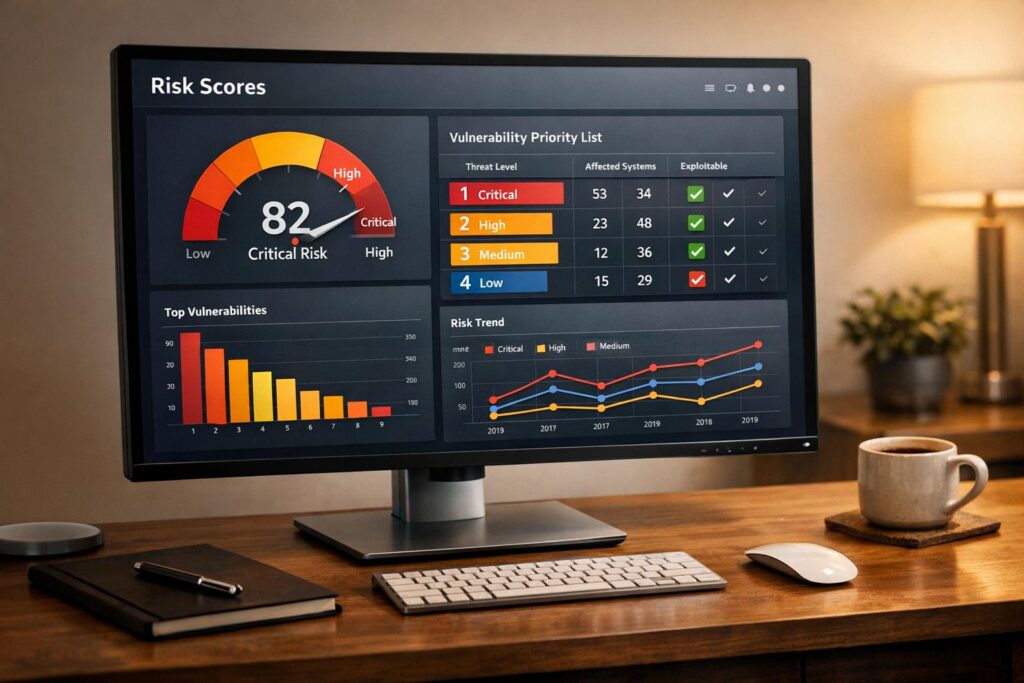
Use AI-driven risk scoring to focus on exploitable vulnerabilities, automate prioritization, and reduce patch workload and downtime.
Read MoreHow Deep Learning Enhances Intrusion Detection Systems

How CNNs, RNNs, LSTMs and autoencoders boost IDS accuracy and detect zero-day attacks, with deployment challenges like adversarial threats and data imbalance.
Read More