
Learn what generative AI can do for your security operations center
Generative AI is transforming Security Operations Centers (SOCs) by automating time-consuming tasks like incident reporting, threat analysis, and alert management. It processes large volumes of data in seconds, helping analysts focus on critical decisions. Here’s what you need to know:
- Key Benefits: Automates repetitive tasks, reduces alert fatigue, and speeds up threat detection and response.
- Challenges SOCs Face: Overwhelming alerts, staffing shortages, and complex threats.
- How It Helps: Generates tailored insights, prioritizes incidents, and integrates seamlessly with existing tools like SOAR and SIEM systems.
- Example Tool: Platforms like The Security Bulldog simplify workflows and improve efficiency for $850/month for up to 10 users.
Generative AI doesn’t replace human expertise – it enhances it, enabling faster, more informed decision-making while maintaining accuracy and consistency.
SOC Automation Project 2.0: How To Use AI in Your SOC Workflow
Automating Threat Detection and Intelligence
Generative AI is revolutionizing Security Operations Centers (SOCs) by tackling the massive volumes of security data they deal with daily. Unlike traditional systems that rely on fixed rules and signatures, generative AI dives deeper – understanding context and connections within the data. This allows it to identify threats that might evade conventional detection methods.
Real-Time Threat Detection
Generative AI reshapes how SOCs manage the endless influx of logs, network telemetry, and security alerts. By analyzing patterns across various data sources at once, it provides a broad view of potential threats, linking events that might otherwise appear as low-priority, unrelated alerts to human analysts.
For example, when reviewing network traffic logs, generative AI doesn’t just flag known malicious IPs or unusual port activity. Instead, it examines communication patterns and timing to uncover anomalies that might signal advanced persistent threats or even zero-day attacks. This capability is especially valuable against attackers who deliberately avoid triggering traditional, signature-based systems.
Beyond detection, generative AI enhances threat intelligence by streamlining diverse data into actionable insights.
Improved Threat Intelligence
Once anomalies are detected, generative AI turns them into tailored, actionable intelligence by aligning findings with your organization’s unique security landscape. It processes vast amounts of open-source intelligence, such as security reports, vulnerability disclosures, and threat research, to determine which threats are most relevant to your specific industry, technology stack, and current defenses.
Another strength lies in translating complex intelligence into practical actions. For instance, when a new attack method is added to the MITRE ATT&CK framework, AI can map the threat to your existing defenses, highlight vulnerabilities, and recommend precise adjustments. This bridges the gap between high-level threat research and the day-to-day tasks of securing your environment.
Example: AI-Powered Analysis with The Security Bulldog
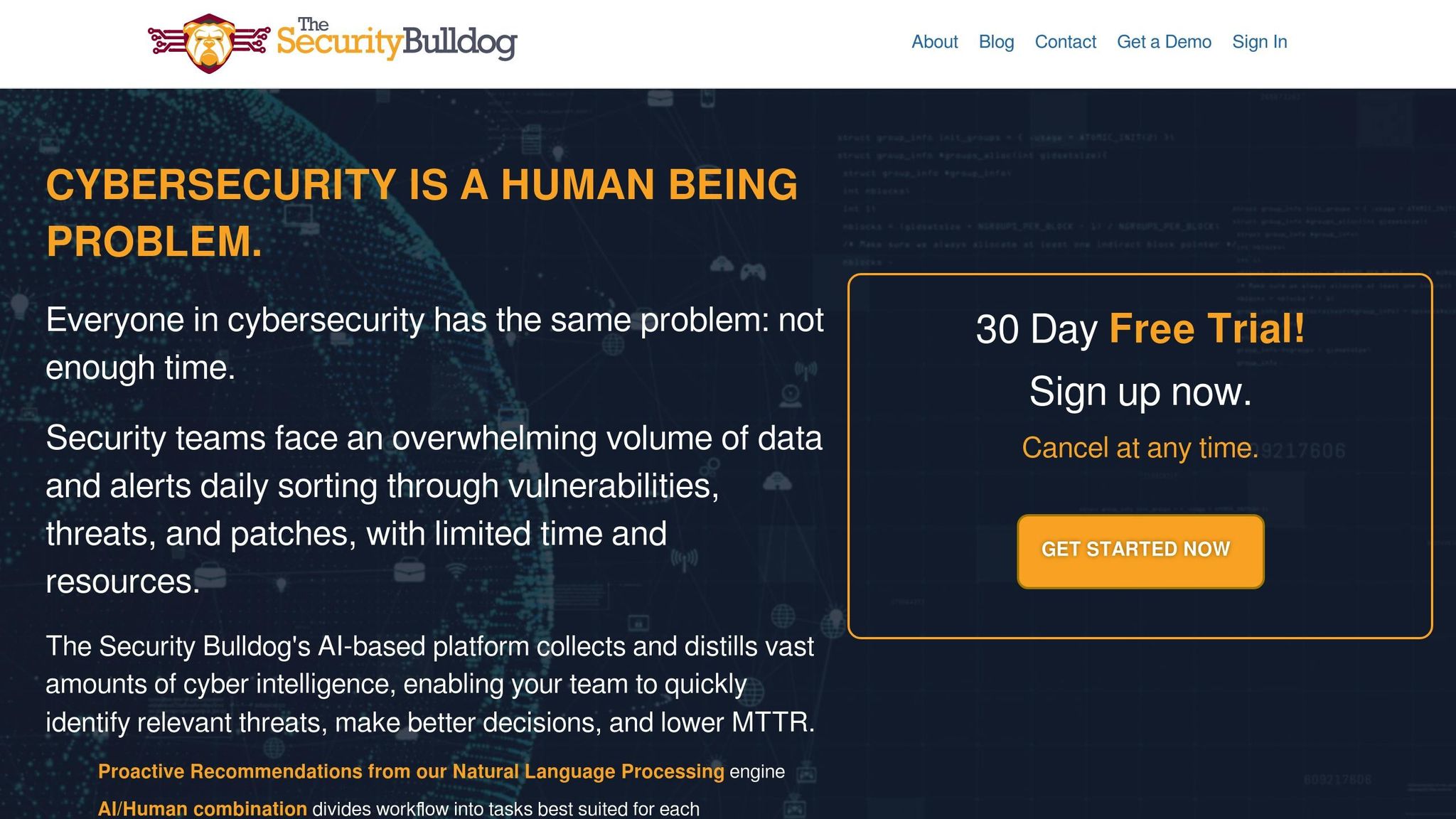
The Security Bulldog is a platform that uses generative AI to transform raw threat data into concise, actionable intelligence. It pulls from sources like the MITRE ATT&CK framework and CVE databases, distilling this information into insights SOC teams can immediately use.
Powered by natural language processing (NLP), The Security Bulldog understands the context and relationships within data. For example, it can analyze CVE disclosures alongside MITRE ATT&CK techniques to identify vulnerabilities most likely to be exploited in your environment. It then recommends prioritized remediation steps, saving analysts significant time during investigations.
With its integration capabilities, The Security Bulldog feeds this intelligence directly into existing SOAR platforms and SIEM systems, creating a seamless workflow from detection to response. Its curated feeds also reduce information overload by focusing on the threats most relevant to your IT environment. This targeted approach ensures critical intelligence is acted upon quickly, enabling analysts to make faster, more informed decisions without being bogged down by unnecessary data.
Streamlining Incident Response with Generative AI
When security incidents strike, every second matters. Generative AI takes incident response to the next level by automating repetitive tasks and ensuring teams follow consistent, effective protocols during high-stress situations. Instead of relying on analysts to recall intricate procedures or sift through documentation, AI-driven systems guide teams step-by-step through established workflows while managing routine tasks in the background.
One of its standout features is the ability to simplify root-cause analysis. By correlating alerts, AI can quickly determine whether an incident is isolated or part of a larger, coordinated attack. Let’s dive into how these capabilities are realized through automated playbooks, smarter prioritization, and integration with SOAR platforms.
Automated Incident Playbooks
Generative AI upgrades traditional incident playbooks by making them dynamic and adaptable. Unlike static playbooks that provide generic instructions, AI-driven systems tailor response procedures based on the specifics of each threat. These systems analyze incoming data, taking into account the type of threat, the affected systems, and the organization’s unique environment, to suggest customized workflows.
AI-powered playbooks also automatically populate key incident details and cross-reference past data to recommend the most effective responses. This reduces the mental strain on analysts during high-pressure scenarios. Over time, the system learns from previous incidents, refining its recommendations and building a continuously improving knowledge base that supports faster, smarter responses.
Smart Ticket Prioritization
Traditional methods of prioritizing security incidents often fall short because they rely on basic severity levels without considering the broader business impact or current threat landscape. Generative AI changes the game by analyzing multiple factors simultaneously to generate priority rankings that reflect real-world urgency and consequences.
For example, a medium-severity alert affecting customer-facing systems during peak hours could take precedence over a high-severity alert on an isolated internal server. AI can also factor in threat actor behavior and campaign intelligence. If indicators suggest the involvement of a known advanced persistent threat group, related incidents can be escalated automatically – even if individual alerts seem less critical. This level of context helps teams focus on the threats that pose the greatest risk.
AI doesn’t stop there. It monitors how incidents evolve, adjusting priorities in real time. For instance, an initially low-priority event that starts showing signs of lateral movement or privilege escalation can be automatically reclassified as high-priority, ensuring no critical threat slips through the cracks.
Integration with SOAR Platforms
Generative AI takes SOAR platforms to a whole new level by adding context-aware decision-making to their existing capabilities. While traditional SOAR tools excel at executing predefined workflows, AI integration allows these platforms to make more nuanced decisions based on a deeper understanding of each situation.
Take The Security Bulldog, for example. As highlighted earlier, its curated threat intelligence seamlessly integrates into SOAR workflows. Using natural language processing, it translates complex threat research into actionable automation rules that SOAR systems can execute. This creates a smooth transition from detection to automated response.
AI-enhanced SOAR platforms also excel at handling false positives. By analyzing alert patterns and learning from analyst feedback, they can filter out benign activities more effectively. This reduces noise, combats alert fatigue, and ensures that critical incidents are addressed immediately.
Another standout feature is cross-platform coordination. Generative AI enables SOAR systems to communicate with various security tools using natural language interfaces. Instead of requiring intricate API configurations for each tool, AI translates response actions into commands tailored to each platform. This simplifies the deployment and upkeep of automated workflows, making them more efficient and easier to manage.
Improving Analyst Productivity and Decision-Making
Security analysts face the challenging task of managing countless alerts every day while keeping an eye on increasingly sophisticated threats. Generative AI steps in as a kind of digital assistant, streamlining data interpretation and spotting patterns. This helps analysts make faster, more informed decisions, tackling issues like alert fatigue head-on.
Reducing Alert Fatigue
One standout advantage is its ability to ease alert fatigue. By analyzing patterns to filter out false positives and low-priority alerts, generative AI sharpens the accuracy of triage. This allows security teams to focus their energy where it matters most – on addressing critical threats.
sbb-itb-9b7603c
How to Integrate Generative AI into SOC Workflows
Incorporating generative AI into your Security Operations Center (SOC) workflows doesn’t have to be overwhelming. Start small by using your existing infrastructure and scaling up as you see results. Begin by pinpointing the SOC functions where AI can make the biggest difference.
Finding High-Impact Use Cases
Focus on areas that slow your team down, like managing large volumes of alerts, analyzing logs, or conducting threat hunts. These are prime candidates for automation, offering a strong return on investment. Generative AI can combine threat intelligence from multiple sources into actionable insights, streamlining operations. Repetitive tasks in incident response are also ideal for AI-driven automation, freeing up analysts for more complex challenges.
Reviewing Current Tools and Data Sources
Take a close look at your SOC tools to evaluate their compatibility with AI. Check that your SIEM, endpoint detection, and network monitoring systems allow API access or data exports. High-quality data is crucial, so ensure your log management processes and threat feeds are up to par. Additionally, confirm that your SOAR platforms can integrate smoothly with your AI solution to avoid disruptions in workflows.
Testing and Measuring Success
Start with a pilot program focused on one specific goal – like reducing detection times or improving alert prioritization. Set clear baseline metrics, such as Mean Time to Detect (MTTD), Mean Time to Respond (MTTR), false positive rates, and analyst productivity, to measure the impact. Over a 90-day period, compare AI-generated recommendations to traditional methods using built-in analytics. This will help you assess how effectively the AI is improving your processes.
The Security Bulldog offers built-in analytics to help SOC managers automatically track these metrics. During the pilot, observe how AI-powered insights influence your team’s decision-making and daily workflows. Pay close attention to instances where AI recommendations differ from traditional approaches; these moments often reveal new threat patterns or operational insights.
Regular team review sessions are essential throughout this process. Analyst feedback can uncover unexpected benefits or challenges that metrics alone might not highlight. These discussions can also reveal opportunities to refine workflows or improve integration, laying the groundwork for broader AI adoption in your SOC.
Benefits and Considerations Table
Understanding the strengths and challenges of generative AI helps in making smarter decisions about integrating it into Security Operations Centers (SOCs). While AI can bring significant improvements, it’s not a universal solution.
Advantages vs. Limitations
Here’s a breakdown of the key benefits and challenges when using generative AI in security operations:
| Advantages | Limitations |
|---|---|
| Speed and Scale: Processes large volumes of alerts much faster than humans | Human Oversight Required: AI outputs often need verification by skilled analysts |
| 24/7 Operation: Monitors continuously without fatigue | Model Drift: Performance can decline over time without regular updates and maintenance |
| Cost Reduction: Reduces manual effort for repetitive tasks | Initial Investment: Requires a substantial upfront cost, especially for large-scale implementations |
| Consistency: Ensures uniform analytical standards across incidents | False Positives: May produce inaccurate threat alerts that need manual review |
| Pattern Recognition: Detects subtle or emerging attack patterns that might go unnoticed | Data Quality Dependency: Outputs depend heavily on the quality of the input data |
| Rapid Response: Facilitates quick initial actions during incidents | Limited Context: Struggles with understanding complex business logic or unique scenarios |
| Knowledge Retention: Retains institutional knowledge even with staff changes | Integration Complexity: Integrating with existing tools can be time-consuming and challenging |
| Multilingual Analysis: Analyzes threat intelligence in various languages | Compliance Concerns: May not meet all regulatory requirements in certain industries |
These points highlight the need for a balanced approach. Generative AI works best when paired with human expertise. Clear expectations and a phased, iterative rollout are critical for success.
Your organization’s current security maturity plays a big role here. Teams with established processes often find it easier to integrate AI compared to those still building foundational SOC practices. By weighing these factors carefully, you can create a strategic plan for using AI effectively in your security operations.
Conclusion: The Future of AI-Powered SOCs
The world of cybersecurity is evolving at a breakneck pace, and generative AI is reshaping how Security Operations Centers (SOCs) tackle modern threats. Organizations that adopt this technology today stand a better chance of staying ahead of tomorrow’s challenges.
Key Takeaways
Generative AI is revolutionizing SOC operations by working with human analysts, not replacing them. It thrives on processing enormous amounts of security data, spotting patterns that might go unnoticed, and automating repetitive tasks that often drain analysts’ time. This synergy allows security teams to shift their focus to strategic decisions and tackling complex threats.
Tasks that once took hours – or even days – can now be completed in mere minutes. AI-powered systems can analyze threats, draft incident reports, and recommend response actions with remarkable efficiency. This not only saves time but also optimizes costs by automating processes and making better use of resources.
That said, success depends on thoughtful implementation. The best AI-powered SOCs ensure strong human oversight, prioritize high-quality data, and roll out changes gradually. Rushing into adoption without proper planning can lead to issues like false positives and integration headaches.
Platforms like The Security Bulldog exemplify how generative AI can empower SOCs to meet these challenges head-on.
The Role of The Security Bulldog
The Security Bulldog showcases the precision and efficiency generative AI brings to SOCs. Using its proprietary Natural Language Processing engine, the platform processes open-source intelligence from sources like MITRE ATT&CK and CVE databases, turning raw data into actionable insights that SOC teams can use immediately.
Its semantic analysis tools enable analysts to grasp complex threat scenarios far faster than traditional research methods. By integrating seamlessly with existing security tools through SOAR platforms, The Security Bulldog streamlines workflows and enhances overall operations.
For $850 per month for up to 10 users, The Security Bulldog provides advanced AI capabilities at an accessible price point. Larger organizations can opt for enterprise plans with custom integrations tailored to their needs.
The future of cybersecurity lies in merging AI’s power with human expertise. Organizations that take proactive steps to integrate these technologies today will be better equipped to navigate the increasingly sophisticated threat landscape of tomorrow.
FAQs
How can generative AI work with existing security tools like SOAR and SIEM in a Security Operations Center?
Generative AI works hand-in-hand with tools like SIEM, SOAR, and XDR platforms to analyze data from various sources and deliver quick, actionable insights. It can break down critical events, pinpoint root causes, flag affected assets or users, and even recommend steps to address issues.
By doing so, it simplifies workflows, cuts down response times, and enhances decision-making within the Security Operations Center. This allows teams to handle threats more efficiently and effectively.
How can organizations successfully integrate generative AI into their Security Operations Center (SOC)?
To effectively bring generative AI into a Security Operations Center (SOC), it’s crucial to align its capabilities with the center’s existing processes. Generative AI can play a key role in automating threat detection, simplifying incident response, and producing actionable threat intelligence. When integrated into daily workflows, it can help teams make better decisions and work more efficiently.
For optimal results, it’s important to customize AI tools to fit your SOC’s specific requirements. This could mean training AI models on relevant datasets, connecting AI solutions with current security platforms, and equipping teams with the skills needed to fully leverage the technology. When done right, generative AI can cut response times, make complex data easier to understand, and enhance overall team performance.
How can generative AI help reduce alert fatigue and boost the productivity of security analysts?
Generative AI plays a key role in cutting down alert fatigue by filtering and prioritizing alerts, ensuring security analysts can concentrate on addressing the most pressing threats. It also excels at breaking down complex threat intelligence and incident reports into straightforward, actionable insights, ultimately saving time and effort.
Beyond that, generative AI supports analysts by identifying patterns in security logs, recommending next steps during investigations, and even providing real-time learning opportunities to sharpen decision-making skills. These features simplify workflows, making it easier for teams to operate with greater focus and efficiency.